

In Peru, Ordering Ceviche After 3 PM Marks You as a Tourist Immediately
In Lima, the most important rule about ceviche has nothing to do with how it's made. It's about when you eat it. Order ceviche after 3 PM at a traditional cevichería — a restaurant specializing in ceviche and seafood — and something shifts — the waiter's expression, the energy in the room. Ask for it at dinner and you've either ended up somewhere that caters to tourists, or you're in the wrong city entirely.
Why Does Peru's National Dish Have a Curfew?
The rule is old enough that most Peruvians have forgotten exactly why it exists.
Before refrigeration reached Lima's fish markets, the logic was plain. Fishermen pulled their catch at dawn. A cevichería prepped the fish by 10 AM, leche de tigre — the citrus marinade — doing its work by midday. By evening, that ceviche had been sitting unrefrigerated for twelve hours. The taboo wasn't cultural preference; it was survival.1 As chef José Del Castillo explained to El Comercio, the rule was born from necessity — fish that sat all day would spoil by nightfall.2
What's surprising isn't the origin. It's that the taboo outlived the problem. Chef José Del Castillo of Lima's La Red restaurant told El Comercio plainly that ceviche has a bad reputation at night — that years ago, a kitchen would prepare the dish in the morning, the lime would cure it by noon, but by evening it had been sitting at room temperature all day and made people ill.2 Refrigeration arrived. The habit didn't leave.
Del Castillo pushed the point further: if you renamed the dish, Peruvians would happily eat it at night. Sushi restaurants in Lima thrive at 9 PM. They serve raw fish. Nobody protests. Ceviche, at that hour, remains impossible — not because of the fish, but because of the name attached to it.
What the Closing Time at the World's Most Famous Cevichería Actually Tells You
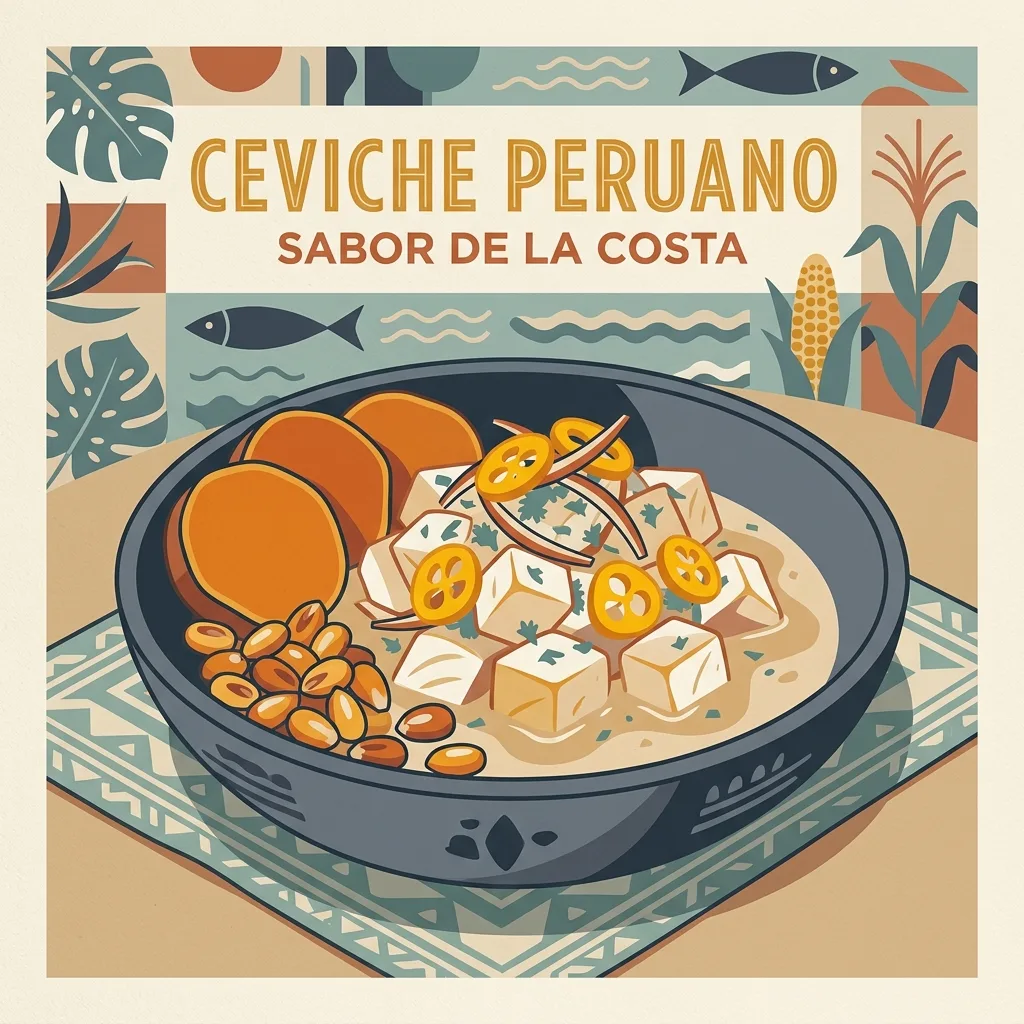
Gastón Acurio is to Peruvian cuisine what Julia Child was to French cooking in America. His flagship La Mar Cebichería, on Av. La Mar in Miraflores, is among the most cited restaurants in Latin America.3 It serves extraordinary ceviche on white plates with camote, a boiled sweet potato — and cancha, the toasted Andean corn that crunches before you've finished sitting down.
La Mar closes at 5 PM.3 On weekdays, noon to five. No dinner service. No exceptions.
Not 6 PM. Not 7. Five o'clock, and the gates come down.
This is the cleanest proof of how seriously Lima takes the rule. It's not that ceviche restaurants struggle to find dinner customers. It's that the city's best one has decided, structurally, that dinner service isn't part of what it does. The almuerzo window — lunch, the main meal traditionally eaten from noon to 3 PM — is when Lima eats seriously. Ceviche belongs to that window. That is its time.
By 4 PM, the energy at these places visibly shifts. Staff start clearing. The queue outside is gone. The fish, if there's any left, won't be on tomorrow's menu — it won't be on tonight's, either.
How an Invisible Rule Becomes a Lived Experience
Chema Tovar, a foreign writer who moved to Lima, described his first weeks navigating this in Revista Placeres in March 2026: his first great cultural defeat came one ordinary evening, just past eight, when a craving sent him through the streets searching for that sharp, acid freshness — only to find steel shutters down and looks of bewilderment. His Peruvian friends told him, with a solemnity bordering on the mystical, that you don't eat ceviche at night — as if he were asking about a forbidden ritual or a slow poison.4
A forbidden ritual or a slow poison. That's not how people describe a lunch preference.
The rule travels with social enforcement. A tourist who doesn't know better might stumble into one of the handful of Lima restaurants that serve ceviche after dark. A local who finds out will ask which restaurant — not because they want to go, but because the answer tells them something about the place. Is it a huarique, a family-run spot tucked into a residential street in La Victoria? Or is it something catering to visitors who don't know the difference between fresh fish and fish that's been sitting in a refrigerator since morning?
The distinction matters because the two categories are real. Traditional cevicherías work with the fish that arrived that day, prepped for the lunch rush, gone by closing. A restaurant serving ceviche at 9 PM in Miraflores is almost certainly working with yesterday's catch, or fish that was frozen and thawed. Locals know this. The curfew exists partly to make that visible — a cevichería that closes by 5 PM is implicitly saying something about where its fish comes from.
Where the Rule Breaks Down — and Why
Peru is a large country, and Lima is not Peru.
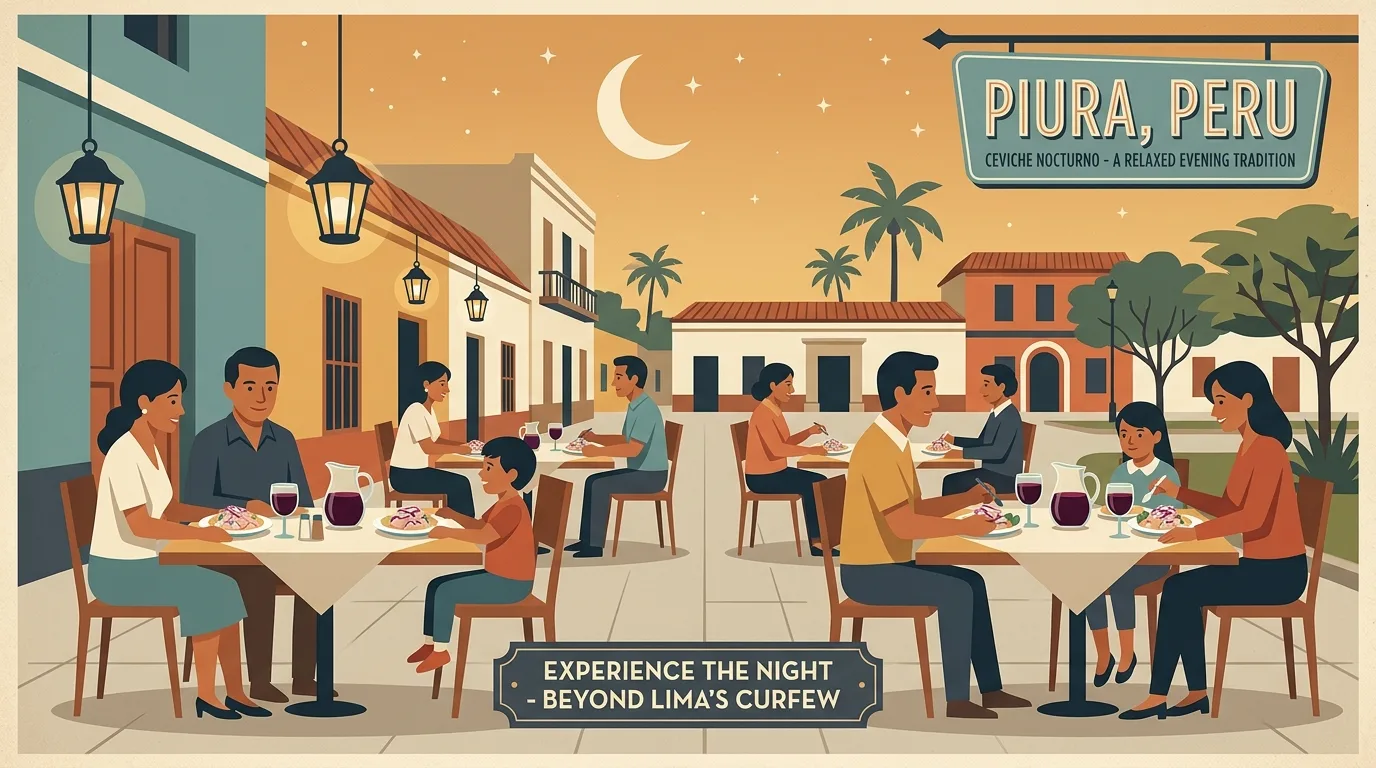
In Piura, a city of roughly half a million people 1,000 km north on the Pacific coast, ceviche is eaten at dinner without controversy. Families pull chairs around outdoor tables at 10 PM, sweating glasses of chicha morada, a traditional Peruvian purple corn drink, in front of them, ordering the same dish Lima insists must be finished before mid-afternoon.5
The difference is temperature. Piura's nights stay at around 28°C year-round. Enrique Zurita, cultural manager at the Patronato Gastronómico del Perú, told La República directly: Climate is the main factor. For limeños, ceviche is a cold dish, ideal for breakfast or lunch. It's a fresh dish. Piura at night is 28 degrees.
5
A cold, acid dish on a hot night makes different sense than it does in Lima, where evenings turn grey and cool off the Pacific. Climate, not culture alone, drew the original line — and in Piura, that line was drawn somewhere else.
Back in Lima, the rule is also quietly shifting at the edges. Puerto Norte, a restaurant in the Centro, is among the few cevicherías explicitly serving late into the evening. Its chef José Jiménez told Revista Review in 2022 that nighttime demand for ceviche is growing — gradually, diners were requesting it.6 La Pescadería de La Juanacha, a huarique in La Victoria, stays open until 1 AM. The fact that a single neighborhood restaurant keeping late hours was considered newsworthy enough to cover in La República says something about how strong the taboo remains.7
What None of This Has to Do with Health
The rule feels like it should be about digestion. It isn't.
Fish is lighter than the red meat that Peruvians regularly eat for dinner. The leche de tigre — the lime-based marinade that transforms raw fish into ceviche — is citrus, onion, ají amarillo, and salt. Nothing in it becomes dangerous at night, or harder to process. Multiple chefs interviewed by El Comercio and Revista Review confirmed there is no nutritional basis for the restriction.2 A well-handled, properly refrigerated piece of fresh fish is safe at any hour.
The rule is cultural inertia that survived the conditions that created it. The pre-refrigeration risk was real. The refrigerator arrived. The rule stayed because the rule had become something else — a marker of how things are done, of what separates someone who knows Peru from someone who arrived last Tuesday.
UNESCO recognised ceviche as Intangible Cultural Heritage of Humanity in December 2023.8 The inscription is for the whole practice: the preparation, the rituals, the meanings attached to when and how it's consumed.
The lunch hour isn't incidental to ceviche's cultural weight. It's built into the thing itself.
QWhat should you order for dinner in Lima if you want fresh fish?
QIs the rule actually observed in high-end Lima restaurants like Astrid y Gastón?
QHas any other country with a strong ceviche tradition adopted Peru's lunch-only rule?
QWhat does the original Moche ceviche — before lime — actually taste like?
QIf you're in Lima and want to find a cevichería that's actually worth going to, how do you judge it?
Show all 9 wordsShow fewer
Correspondence.